What we desire in the three marriages is a sense of profound physical participation with creation, the reconfirmation that we are not alone in the world and the reminder that there is a larger context to existence than the one we have established ourselves.
The central idea of the book is that work (broadly defined), relationships, and self are all important parts of life that we should manage well. Some people dedicate themselves completely to work and neglect their relationships and themselves, while others give up everything in pursuit of enlightenment. These people might seem heroic, but I prefer David Whyte’s view. Some passages are difficult to follow, but the conclusions at the end of each chapter help.
This sense of belonging and not belong is lived out by most people through three principal dynamics: first, through relationship to other people and other living things (particularly and very personally, to one other living, breathing person in relationship or marriage); second, through work; and third, through an understanding of what it means to be themselves, discrete individuals alive and seemingly separate from everyone and everything else.
…
To neglect any one of the three marriages is to impoverish them all, because they are not actually separate commitments but different expressions of the way each individual belongs to the world.
…
Work is a constant conversation. It is the back-and-forth between what I think is me and what I think is not me; it is the edge between what the world needs of me and what I need of the world. Like the person to whom I am committed in a relationship, it is constantly changing and surprising me by its demands and needs but also by where it leads me, how much it teaches me, and especially, by how much tact, patience and maturity it demands of me.
…
Happiness in the second marriage of work, like happiness in the first marriage with a person, is possible only through seeing it in a greater context than surviving the everyday. We must have a relationship with our work that is larger than any individual job description we are given. A real work, like a real person, grows and changes and surprises us, asking us constantly for recommitment. In work, we have often made secret vows; sometimes we do not know ourselves what those vows are until we look back with some perspective on the actual nature of the work we have accomplished.
…
Neglecting this internal marriage, we can easily make ourselves a hostage to the externals of work and the demands of relationship. We find ourselves unable to move in these outer marriages because we have no inner foundation from which to step out with a firm persuasion. It is as if, absent a loving relationship with this inner representation of our self, we fling ourselves in all directions in our outer lives, looking for love in all the wrong places.
…
Happiness is somebody to love, Something to do, And something to hope for. CHINESE PROVERB
There seems to be a constant visiting dynamic in all stages of life where it appears that we get only the girl, the guy, the work, the job, the sense of self, or a participation in wider creation that we actually feel we are worthy of. If we don’t feel we deserve it, then, like a spendthrift heiress, throwing her patrimony to the winds, we do our best to sabotage and give away what we feel we did not deserve in the first place.
…
Confidence and self-belief are contagious; they are not a matter of pure arrogance or overweening egotism, they are the sense of being part of a greater story others have not yet discovered and giving off an almost physical sense of invitation to join that story, that disarms an then changes potential enemies into allies.
…
…life can find you only if you are paying real attention to something other than your own concerns, if you can hear and see the essence of otherness in the world, if you can treat the world as if it is not just a backdrop to your own journey, if you can have a relationship with the world that isn’t based on triumphing over it or complaining about it.
…
To glimpse our vocation, we must learn how to be sought out and found by a work as much as we strive to identify it ourselves. We must make ourselves findable by being seen; to do that we must hazard ourselves and make ourselves available to the world we want to enter. Finding and being found is like a mutual falling in love. To have a possibility of happiness we must at the beginning fall in love at least a little with our work. We can choose a work on a mere strategic, financial basis, but then we should not expect profound future happiness as a result.
…
A real work, like a real love, takes not only passion but a certain daily, obsessive, tenacious, illogical form of insanity to keep it alive. Once you have experienced the real essence at the beginning of the affair with a work, the company, the initial image with which we fell in love, alive. We want to be surprised again and again by where our work takes us and wha kind of person we are becoming as we follow it. Like a love, or a sense of our selves, we can nibble and negotiate at the edges but the central core of the relationship is actually nonnegotiable.
…
The innocence of youth is necessary again and again through the threshold of a life no matter our chronological age. Therefore, at any time of life, follow your own questions; don’t mistake other people’s questions for your own. Fall in love with your own questions so that you can commensurately be disappointed by them at a later date. See innocence not as something to be replaced by experience but as a necessary way, no matter your actual age, of paying attention, without which you cannot begin a new cycle of investigation. Fall in love with the possibilities ahead. At least to begin with, be infatuated with an imagined perfection.
…
It may in fact be, that the very essence of what individuals have to offer the world is through a close understanding of their weaknesses and blind spots–blind spots in themselves or in others. The very dynamic we confront when we feel it is impossible is the very dynamic we will put into the work, a dynamic that will make it distinctive and entirely our own.
…
The pursuit of the self is the pursuit of that part of us not defined by our worries and anxieties.
…
But this pursuit begins only by admitting that human anxiety is endless and to be expected.
…
The pursuit of the self is also the pursuit of us that is untouched by our successes and accomplishments.
…
…the marriage with the self is the pursuit of a way of being that is so alive to all the phenomena of existence that it stops distinguishing so much between what is winning and what is losing.
…
What we see as risk and foolhardiness on the outside can seem more like a constant cohesive drive on the inside that holds to priorities that cannot be discerned by others because they reside in a far too private chamber of personal experience to be shared easily. To dare everything is not necessarily to travel off, but often the opposite, to have faith in a foundation you have discovered in life and which, though it is difficult to describe, even to yourself, you refuse to relinquish.
…
It is not time or opportunity that is to determine intimacy; it is disposition alone. Seven years would be insufficient to make some people acquainted with each other, and seven days are more than enough for others.
…
Vanity and pride are different things, though the words are often used synonymously. A person may be proud without being vain. Pride relates more to our opinion of ourselves, vanity to what we would have others think of us.
…
In a very personal way we are marrying not only a person’s ability to love and take care of us, but also that person’s particular species of selfishness and particular form of egotism. It is only a question of time before these appear. One of the tests of finding the right person is to ask ourselves if this is the particular form of selfishness and egotism we can live with. Considering the difficulties of marriages we might pose the question on a grander scale and ask if this is the particular form of insanity we can live with. A sign of possible success is our ability to answer in the affirmative. It measures the chemistry is right, and also that we are looking not for perfection in our partner but for a mutual exploration of imperfections.
…
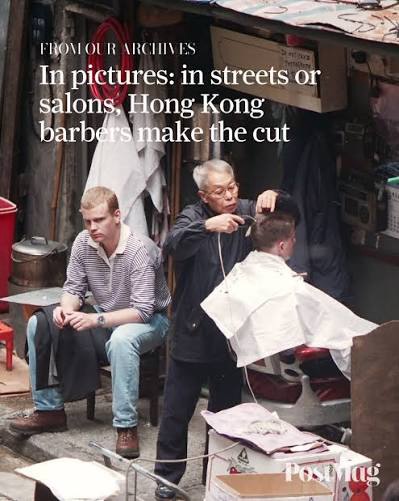
The memory of that man has stayed with me year after year, reminding me that I could work wherever there was a corner, wherever there was a knee or a pen or a pad, wherever there was a pause in the besieging glamor of the world. I didn’t need a paradise in order to work, but work itself, given focus and given time for that focus to blossom, could open a little Eden of its own.
…
In many ways the settled intensity of a good work is very similar. From the outside very little seems to be happening, but in good work we return every day to the desk or the workbench to push it along a little further.
…
Each time we return to the work, that frontier is a little further out and a little nearer to accomplishing what we first set out to achieve. Like being in the midst of a growing family, we can sense the steadily growing satisfaction of a work slowly beginning to form; the coaxing of that work through all the setbacks and the dead ends, the final ability to bring it to a conclusion, and the sense of satisfaction we feel in finally sending out in the world for others to examine and use, is one of the great privileges of having found a vocation to which we want to give ourselves wholeheartedly.
…
We know we have the right vocation and a are happily married to a work when we get a song in our hearts simply from doing the work itself, as much as from its rewards and its fruits.
…
Becoming visible to the world through our work seems to be a central necessity in a vocation. The more invisible we feel, the more unheard, unseen, unheeded, the more dissatisfied we seem to be and the more unreal we seem to ourselves. This attempt at visibility involves not just our effect on the present but also our effect on those yet to follow us. In the marriage with work, our legacy is our favored child, one we have made ourselves from our own body, one that for many years kept us awake at nights, a legacy through which we want to pass on our best hopes and dreams, something with a life of its own and something perhaps, just beginning to create its own future.
…
Being enlightened does not mean we assume supernatural powers or find a perfection that exalts us above the daily losses other human beings are subject to; enlightenment means we have accepted thoroughly our transience, our vulnerability and our imperfections and live just as robustly with them as without them.
…
Each of the three marriages is nonnegotiable. They cannot be “balanced” against one another–a little taken from this and little given to that–except at their very peripheries.
…
To “love” another in the first marriage, we must love the desires that the other person holds for the other two marriages.
…
The conversation between the marriages–the marriage of marriages–can be as difficult otherwise hold together as any of the individual marriages, and like each of the individual marriages this marriage of marriages is best entered, like any other conversation, through the doorway of vulnerability.
…
Doing something innocent, dangerous and wonderful all at the same time may be the perfect metaphor for understanding one of the demands made by a marriage of marriages; the need to live in multiple contexts, multiple layers and with multiple people all at the same time without choosing between them.
…
Thinking of work, self and other as three marriages offers the possibility of living them out in a way in which they are not put into competition with one another, where each of the marriages can protect, embolden and enliven the others and help keep us mutually honest, relevant, authentic and alive.